Introduction
If you’re planning to build a website, you’ve probably heard the term web hosting.
You may know that you need hosting, but you might not understand exactly what it does or why your website needs it.
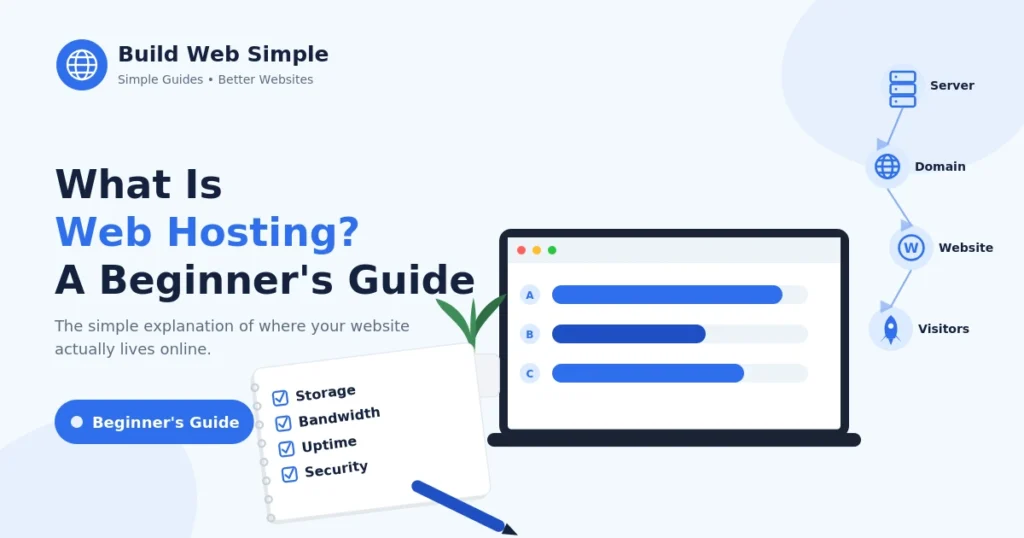
Web hosting is one of the basic building blocks of a website. It provides the server space where your website’s files and database are stored and makes them available to people on the internet.
Understanding hosting doesn’t have to be complicated.
In this guide, we’ll explain what web hosting is, how it works, the different types of hosting, what you should look for when choosing a hosting provider, and how hosting works with your domain and WordPress.
What Is Web Hosting?
Web hosting is a service that provides the resources needed to store and serve a website on the internet.
When you create a website, it contains many files and pieces of information, including:
- Images
- Text
- Web pages
- Themes
- Plugins
- Database information
- Other website files
These files need to be stored somewhere so that visitors can access your website.
A web hosting provider stores these files on servers connected to the internet.
When someone enters your website address into their browser, the browser connects to your hosting server and requests your website’s files.
The server then sends the necessary information back to the visitor’s browser.
How Does Web Hosting Work?
You can think of web hosting as renting space for your website.
Imagine that you want to open a physical shop.
You need a location where you can keep your products and serve your customers.
A website works in a similar way.
Your hosting provides the space where your website lives.
Your domain name provides the address people use to find it.
Your website software and content make up what visitors actually see.
The three work together to make your website accessible online.
Domain Name vs Web Hosting
Domain names and web hosting are related, but they are not the same thing.
What Is a Domain Name?
A domain name is the address people use to visit your website.
For example:
example.com
It gives visitors an easy way to find your website instead of requiring them to remember a server’s technical IP address.
What Is Web Hosting?
Web hosting provides the server where your website’s files and database are stored.
In simple terms:
Domain = website address
Hosting = website storage and server
You generally need both for a self-hosted WordPress website.
Why Does a Website Need Hosting?
A website needs a server that can deliver its content to visitors.
Without hosting, there would be nowhere for the website’s files and database to be stored and served from.
When you purchase hosting, you’re essentially renting access to server resources that allow your website to operate online.
Your hosting provider manages the server infrastructure while you manage your website.
What Is a Web Server?
A web server is a computer system that stores website files and responds to requests from visitors’ browsers.
When someone visits a website, the browser sends a request to the appropriate server.
The server processes the request and sends back the information needed to display the website.
Hosting companies operate servers and provide customers with access to the resources they need.
What Is a Hosting Provider?
A hosting provider is a company that provides web hosting services.
Hosting providers typically offer different plans with different amounts of:
- Storage
- Processing resources
- Memory
- Bandwidth
- Website capacity
- Security features
- Backup options
Different providers offer different technologies, pricing and support.
That’s why it’s important to compare hosting plans rather than choosing the first option you see.
Types of Web Hosting
There are several common types of web hosting.
The right choice depends on your website’s size, traffic, technical requirements and budget.
Shared Hosting
Shared hosting is one of the most common options for beginners.
With shared hosting, multiple websites use resources on the same server.
Because the server resources are shared, these plans are usually more affordable.
Shared hosting can be suitable for:
- New blogs
- Small business websites
- Personal websites
- Beginner affiliate websites
- Small informational websites
As your website grows, you may eventually need to upgrade.
Managed WordPress Hosting
Managed WordPress hosting is designed specifically for WordPress websites.
Depending on the provider, managed hosting may include services such as:
- WordPress updates
- Backups
- Caching
- Security features
- WordPress-specific support
The main advantage is convenience.
Instead of handling every technical task yourself, some of the server and WordPress management is handled by the hosting provider.
VPS Hosting
VPS stands for Virtual Private Server.
A VPS provides a more isolated environment and greater control than typical shared hosting.
It can be useful for websites that need more resources or customization.
However, managing a VPS can require more technical knowledge.
Cloud Hosting
Cloud hosting uses infrastructure made up of multiple connected servers or computing resources.
Depending on the provider, cloud hosting can provide flexibility and scalability.
It may be useful for websites with changing resource requirements.
Which Type of Hosting Is Best for Beginners?
For many beginners, shared hosting is a simple starting point.
If you’re creating a small website, blog or new affiliate website, you may not need an expensive hosting solution immediately.
Managed WordPress hosting can also be a good option if you prefer WordPress-focused management and convenience.
The important thing is to choose hosting based on your actual needs rather than buying more resources than necessary.
What Does Hosting Provide?
Hosting plans can include many different features.
Storage
Storage is the amount of server space available for your website’s files.
Your website uses storage for things such as:
- Images
- Videos
- Themes
- Plugins
- WordPress files
- Databases
A typical new website doesn’t usually need an enormous amount of storage.
Bandwidth
Bandwidth refers to the amount of data transferred between your website and its visitors.
For example, when someone loads an image or web page, data is transferred from your server to their browser.
Websites with more visitors and larger files generally use more bandwidth.
SSL Certificate
SSL helps establish an encrypted connection between your website and its visitors.
Websites using SSL normally use HTTPS.
A hosting plan that includes SSL is preferable for most websites.
Backups
Backups create copies of your website data.
If something goes wrong, a backup can help you restore your website.
However, you should understand exactly what your hosting provider’s backup system includes.
For important websites, maintaining an additional backup strategy can also be useful.
Customer Support
Hosting problems can sometimes be difficult for beginners to troubleshoot.
Good customer support can therefore be valuable.
Before choosing a provider, check:
- Support availability
- Contact methods
- Documentation
- Response times
- User reviews
How Does WordPress Work With Hosting?
WordPress is website software.
Hosting provides the server environment where WordPress is installed and runs.
When you install WordPress on your hosting account, the WordPress files and database are stored on the server.
You can then log into the WordPress dashboard and manage your website.
You can:
- Create pages
- Publish blog posts
- Install themes
- Install plugins
- Upload images
- Change settings
- Manage users
Your visitors don’t need access to your hosting account.
They simply visit your domain and interact with your website.
If you’re ready to build your own website, follow our guide on
how to start a WordPress website.
What Is cPanel or a Hosting Control Panel?
Many hosting providers provide a control panel for managing your hosting account.
Depending on the provider, you may see tools for:
- Domains
- Databases
- Files
- Backups
- Security
- WordPress installation
Some providers use traditional control panels, while others create their own custom dashboards.
You don’t need to understand every hosting tool when you’re starting.
Focus on the tools you actually need.
How Much Does Web Hosting Cost?
Hosting prices vary significantly.
The cost depends on factors such as:
- Hosting type
- Server resources
- Number of websites
- Storage
- Support
- Backup features
- Security features
- Provider
- Subscription period
Some providers offer low introductory prices that increase when the plan renews.
Always check both the initial price and the renewal price before purchasing.
Can You Change Hosting Providers?
Yes.
You are not permanently tied to one hosting provider.
If your website grows or you’re unhappy with your current service, you can migrate your website to another provider.
A migration normally involves moving:
- Website files
- Database
- Domain settings
- Email configuration when applicable
Some hosting providers offer migration services to make the process easier.
What Should Beginners Look for in Hosting?
If you’re choosing hosting for your first website, consider these factors:
Performance
Look for hosting that provides good server performance.
Reliability
Your website should remain accessible and stable.
Security
Look for SSL, backups and other useful security features.
Support
Good support can be especially valuable when you’re starting.
WordPress Compatibility
Make sure the hosting works well with WordPress.
Scalability
Choose a provider that allows you to upgrade as your website grows.
Pricing
Compare both introductory and renewal prices.
If you’re comparing hosting plans, our guide on how to choose the best web hosting for WordPress explains what to look for before buying.
Common Web Hosting Mistakes
Choosing Only the Cheapest Plan
The cheapest plan isn’t necessarily the best value.
Buying Too Much Hosting
A new website usually doesn’t need an expensive enterprise-level hosting plan.
Ignoring Renewal Prices
Always check what you’ll pay after the introductory period.
Ignoring Backups
Make sure you understand how your website is backed up.
Choosing Without Checking Support
If something goes wrong, support can be extremely useful.
Confusing Hosting With a Domain
Remember:
Domain = address
Hosting = server space
Web Hosting Checklist for Beginners
Before purchasing hosting, check:
☐ WordPress compatibility
☐ SSL certificate
☐ Reliable performance
☐ Backup options
☐ Security features
☐ Customer support
☐ Sufficient storage
☐ Suitable bandwidth
☐ Clear renewal pricing
☐ Upgrade options
Frequently Asked Questions
Is web hosting necessary for WordPress?
If you’re using self-hosted WordPress.org, you need web hosting to store your WordPress files and database.
Is web hosting the same as WordPress?
No.
WordPress is website software, while hosting provides the server environment where WordPress runs.
Is web hosting the same as a domain?
No.
A domain is your website’s address, while hosting provides the server space for your website.
Can I have multiple websites on one hosting account?
Some hosting plans allow multiple websites, while others allow only one.
Check the limits of your specific plan.
Can I upgrade my hosting later?
Yes. Most hosting providers offer different plans so you can upgrade as your website grows.
Do I need expensive hosting for a new website?
Usually not.
A new website can often start with a suitable beginner plan and upgrade later when necessary.
Conclusion
Web hosting is one of the fundamental parts of running a website.
It provides the server resources needed to store your website and make it available to visitors.
When you’re starting, you don’t need to understand every technical detail.
Focus on choosing hosting that offers good performance, reliability, security, backups, support and room to grow.
Also remember the basic difference:
Your domain is your website’s address.
Your hosting is where your website lives.
Once you understand this relationship, choosing and managing web hosting becomes much easier.